Article: Burn test fabrics: how to identify cotton, linen, wool, silk, polyester, and polyamide
Burn test fabrics: how to identify cotton, linen, wool, silk, polyester, and polyamide
You have a beautiful piece of fabric in your hands. The drape is perfect, the texture feels special, and you can already imagine making something beautiful with it. But what fiber do you actually have? Is it linen, cotton, wool, silk, or perhaps polyester or polyamide? With exclusive deadstock fabrics, a label is sometimes missing. Fortunately, there is a simple way to discover a lot about a fabric: the burn test.
At 040 Design Fabrics, we specialize in exclusive deadstock designer fabrics from the European fashion industry. We work daily with linen, wool, silk, cotton, and high-quality synthetic fibers. Through years of experience, we recognize many fabrics directly by their structure, sheen, hand, and drape. We use the burn test as a valuable addition.
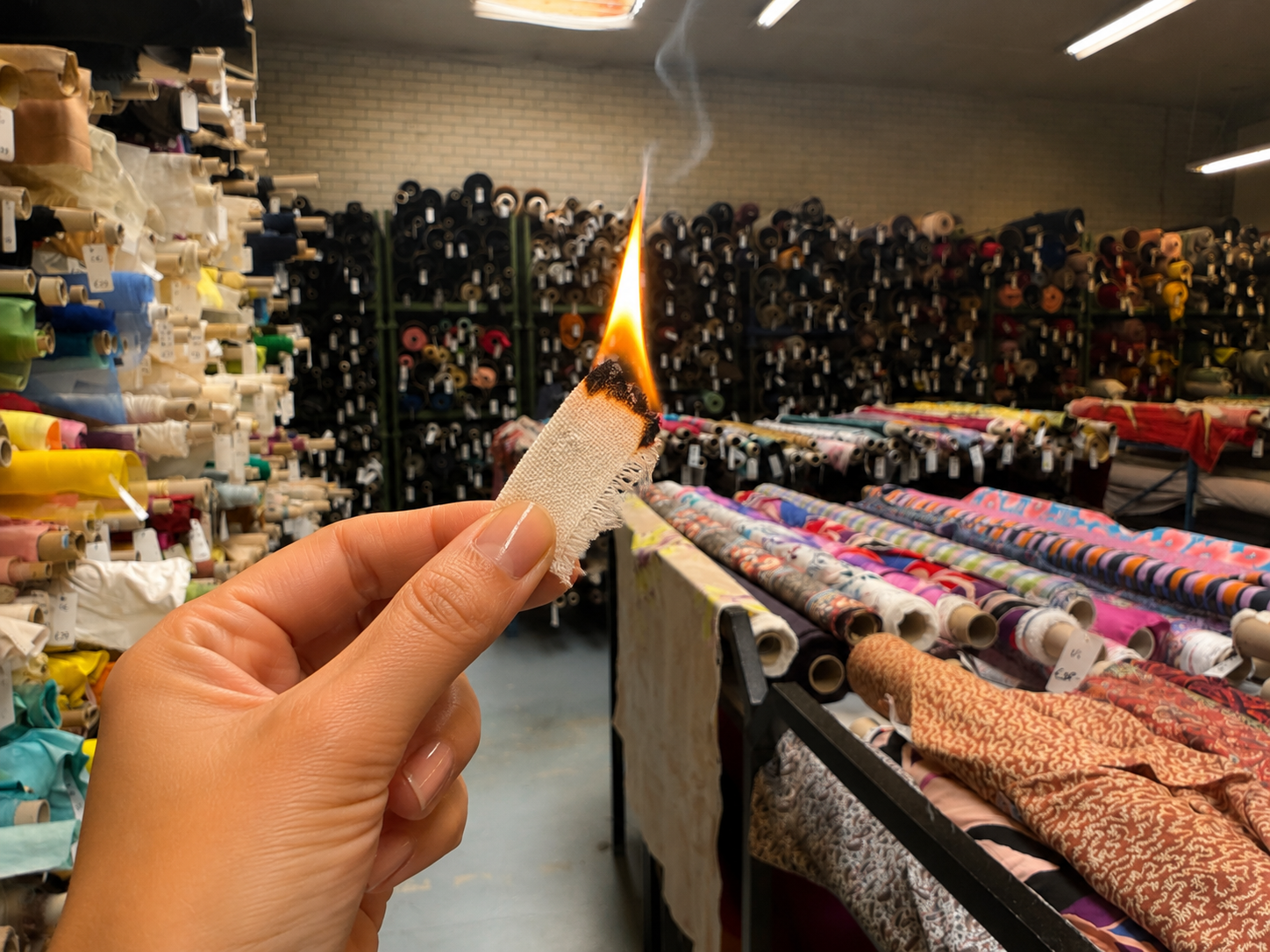
During a burn test, we pay attention to three characteristics: how the fabric reacts in the flame, what smell is released, and what the ash or melted residue looks like. The combination of these three tells a surprising amount about the fibers.
| Material | In the flame | Scent | Ash or melted residue |
| Cotton | Catches fire quickly and burns steadily. | Burning paper or wood. | Soft, light grey ash. |
| Linen | Burns quickly and evenly. | Burning paper. | Fine, light grey ash. |
| Wool | Shrinks away from the flame and often extinguishes itself. | Burning hair or feathers. | Black brittle ball. |
| Silk | Burns slowly and often extinguishes itself. | Burning hair. | Small black brittle ball. |
| Polyester | Melts before burning and can drip. | Slightly chemical, sometimes sweet. | Hard glossy plastic bead. |
| Polyamide | Melts quickly and continues to burn slowly. | Sharp chemical. | Hard, smooth bead. |
Why is this important?
Every fabric requires a different method of processing, pressing, washing, and wearing. Knowing whether a fabric consists of cotton, linen, wool, silk, polyester, or polyamide enables better choices during sewing and maintenance. This is especially important for exclusive deadstock fabrics, as a composition label is not always available.
Frequently asked questions
Is a burn test always reliable?
It is an excellent indication. For blends, such as wool with polyester or linen with cotton, you often see properties of several fibers at once.
Can you distinguish cotton and linen?
That remains tricky. Both are vegetable fibers. Therefore, also look at shine, structure, wrinkling, and drape.
Why is a label missing for deadstock fabrics?
Deadstock fabrics are often remnants or overproductions from European fashion houses. As a result, the original consumer label is sometimes missing.
Can I do this myself at home?
Yes, just use a few loose threads, work safely over a metal dish, and ensure good ventilation.
Tip from our fabric specialists
Never rely solely on a burn test. The best assessment comes from looking, feeling, and testing. It is precisely this combination of expertise that makes it possible to recognize the most beautiful exclusive designer fabrics.
About 040 Design Fabrics
040 Design Fabrics in Eindhoven specializes in exclusive deadstock designer fabrics. Our collection consists of thousands of unique qualities, including linen, wool, silk, cotton, and high-quality blends. This way, beautiful fabrics from the European fashion industry get a second life, and creators can work with materials rarely found in regular fabric stores.